Skin Types 101: Oily, Dry, Combo & Sensitive

If you’ve ever stood in front of a beauty aisle wondering which cleanser, moisturizer, or serum is really right for you, you’re not alone. With endless skincare options out there, understanding your skin type is the key that unlocks a routine tailored just for you.
In this guide, we’ll break down the four main skin types—oily, dry, combination, and sensitive—so you can learn what makes each one unique, how they behave, and the best way to care for them.
👉 If you’d like to start with a bigger-picture view, check out What Is Skin Really?. It explains the layers, functions, and microbiome that make your skin such an incredible organ.
Why Skin Type Matters
Your skin type influences:
- How much oil your skin produces.
- What kinds of products will work best (and worst).
- How your skin may change as you age.
Using the wrong products for your type can disrupt your skin barrier, trigger irritation, or even worsen issues like breakouts or dryness. That’s why knowing your skin type is the foundation of a smart skincare routine.
If you’re unsure what your skin type is, don’t worry—we’ll cover practical tips, and you can also read FAQ: How Do I Know My Skin Type? for a step-by-step guide.
The 4 Main Skin Types
Oily Skin
- What it looks and feels like:
- Shiny appearance, especially in the T-zone (forehead, nose, chin).
What’s happening under the surface:
Oily skin produces excess sebum (oil). While sebum helps protect and hydrate the skin, too much of it can clog pores and trap bacteria.
Best care tips for oily skin:
- Use a gentle foaming or gel cleanser to remove excess oil without stripping.
- Incorporate salicylic acid or niacinamide to regulate oil and minimize pores.
- Don’t skip moisturizer—choose lightweight, oil-free formulas.
- Sunscreen is a must, but opt for mattifying or gel-based textures.
- Enlarged pores.
- Prone to blackheads, whiteheads, and acne breakouts.
Dry Skin
- What it looks and feels like:
- Flaky, rough, or tight after washing.
What’s happening under the surface:
Dry skin struggles to retain moisture due to a weaker skin barrier or lower levels of natural oils.
Best care tips for dry skin:
- Choose creamy cleansers that don’t foam aggressively.
- Layer hydration with hyaluronic acid serums and ceramide-rich moisturizers.
- Limit over-exfoliation, which can worsen dryness.
- Protect your barrier with occlusives (like shea butter or squalane) to seal in hydration.
- Dull appearance, lacking natural glow.
- Fine lines may appear more pronounced.
Combination Skin
- What it looks and feels like:
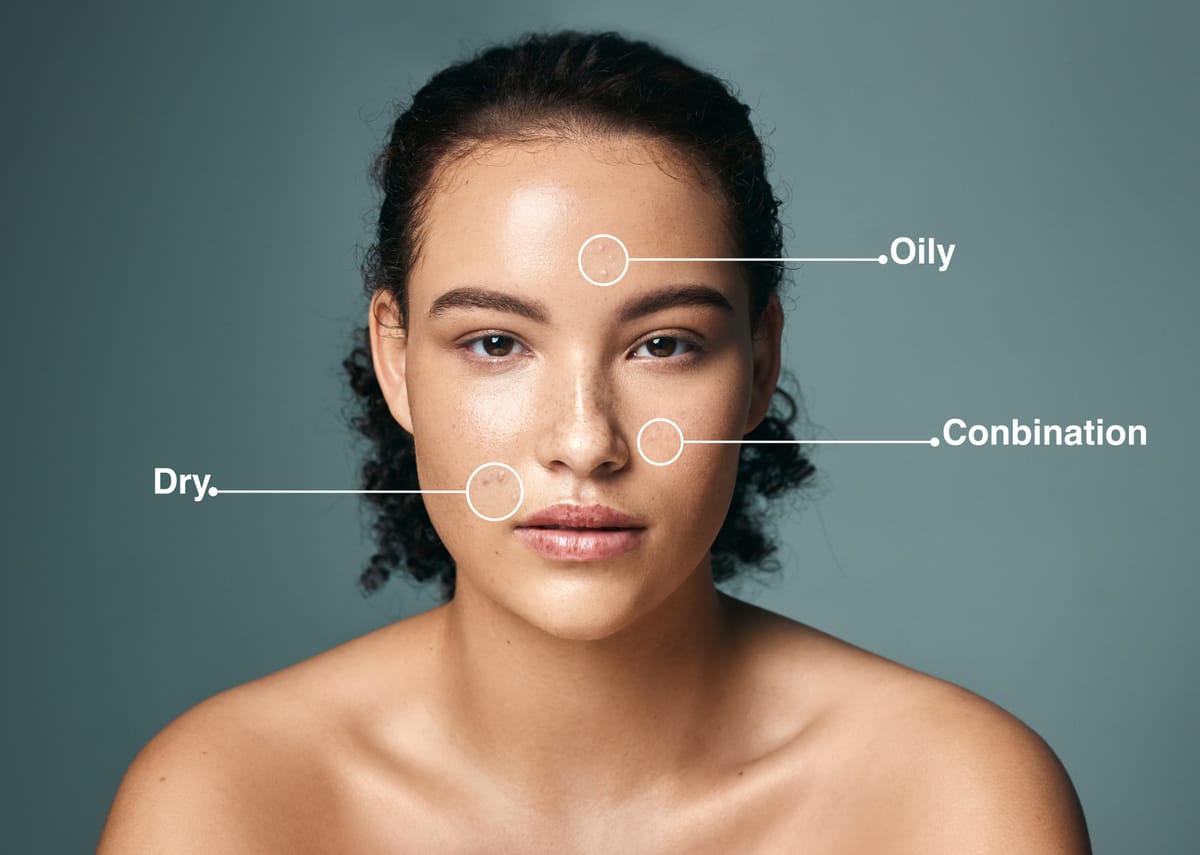
- Oily in the T-zone (forehead, nose, chin).
What’s happening under the surface:
Combination skin produces excess oil in some areas and too little in others. It’s a balancing act between different needs across your face.
Best care tips for combo skin:
- Use a gentle cleanser that won’t over-dry or over-strip.
- Try multi-masking (clay masks on the T-zone, hydrating masks on cheeks).
- Lightweight moisturizers with humectants (like glycerin) work well.
- Spot-treat oily or dry areas instead of treating the whole face the same way.
- Dry or normal on the cheeks.
- Breakouts and dryness can appear at the same time.
Sensitive Skin
What it looks and feels like:
- Easily irritated, with redness or stinging after using new products.
- May react to weather changes, fragrances, or certain ingredients.
- Can overlap with other skin types (e.g., oily-sensitive or dry-sensitive).
What’s happening under the surface:
Sensitive skin often has a compromised barrier or overreactive nerve endings, making it less tolerant to triggers.
Best care tips for sensitive skin:
- Stick with gentle, fragrance-free cleansers and moisturizers.
- Look for calming ingredients like aloe vera, oat extract, or centella asiatica.
- Introduce new products slowly and patch-test first.
- Avoid harsh exfoliants or strong actives until your barrier is stable.
How Skin Type Can Change Over Time
Here’s a little secret: your skin type isn’t set in stone. It can shift with age, climate, hormones, or lifestyle.
For example:
- Oily teens may find their skin becomes combination or normal in their 20s or 30s.
- Dry skin can worsen with age due to reduced oil production and collagen decline.
- Sensitive skin may flare during stressful periods or hormonal changes.
👉 Curious about what drives these changes? How Skin Ages: Collagen, Elastin & More explains how structural proteins in your skin shift over time, altering its texture and resilience.
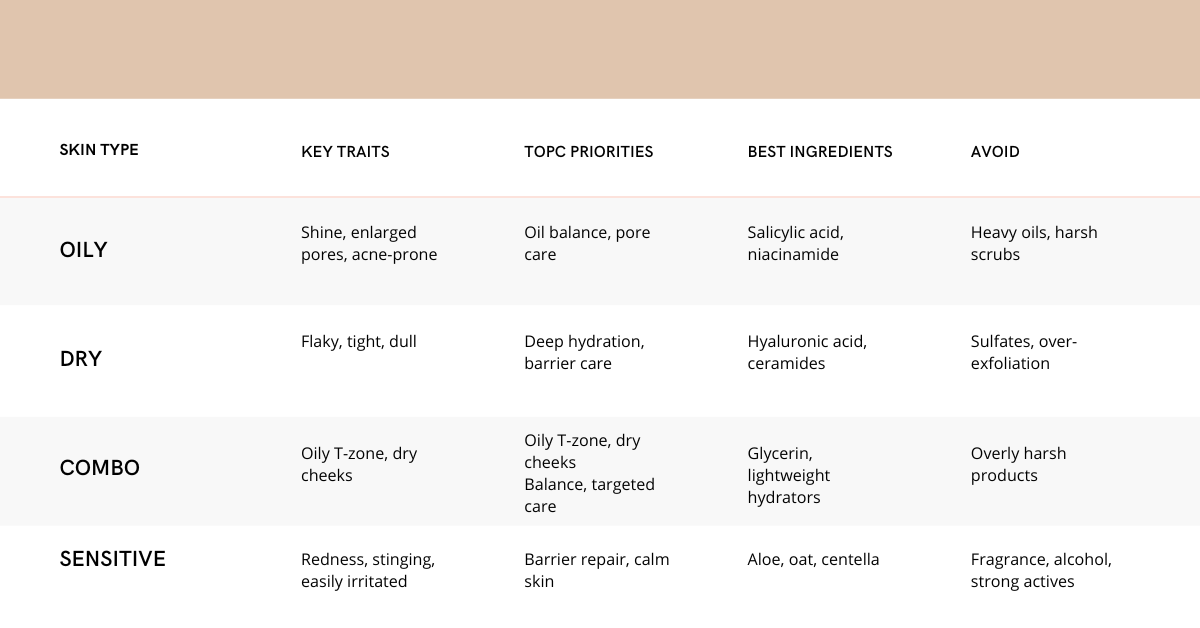
Quick Comparison: Oily vs. Dry vs. Combo vs. Sensitive

Supporting Skin Through the Ages
While we can’t stop time, we can support our skin to age as gracefully and healthily as possible.
In Your 20s
- Focus on prevention: sunscreen daily, gentle cleansers, and lightweight hydration.
- Introduce antioxidants like vitamin C to fight free radicals.
In Your 30s
- Collagen loss becomes more noticeable—add retinoids or peptides to encourage collagen production.
- Hydration is key: look for hyaluronic acid-based serums and moisturizers.
In Your 40s
- Skin becomes thinner and drier. Use richer creams and barrier-supporting ingredients like ceramides.
- Exfoliation (AHAs, BHAs) helps speed up sluggish cell turnover.
50s & Beyond
- Hormonal shifts accelerate changes. Support skin with firming treatments, nourishing oils, and collagen-boosting ingredients.
- Professional treatments (microneedling, lasers, fillers) can help restore lost volume and elasticity.
The Takeaway
Aging is natural, but understanding what’s happening beneath the surface helps you care for your skin in smarter, more intentional ways.
- Collagen keeps skin firm and strong.
- Elastin keeps it bouncy and flexible.
- Other factors like hyaluronic acid, sebum, and cell turnover all contribute to how your skin changes over time.
By protecting your skin from external stressors and supporting it with nourishing skincare, you can maintain its resilience and radiance—at any age.
And remember: aging skin is still beautiful skin. Fine lines are not flaws—they’re signs of life, laughter, and resilience.
FAQ: Your Skin Questions, Answered
Q: How often should I exfoliate my skin?
A: Most skin types do well with exfoliation 1–2 times per week. Over-exfoliation can weaken your barrier and disrupt your microbiome, leading to sensitivity and dryness. Always listen to your skin’s signals.
Q: Do I really need sunscreen every day?
A: Yes! UV rays penetrate clouds and windows, so your skin is exposed daily. Sunscreen is the most powerful anti-aging and skin-protective step you can take.
Q: Can diet really affect my skin?
A: Absolutely. Antioxidant-rich foods (like berries and leafy greens) help protect against free radical damage, while omega-3 fatty acids support hydration and barrier strength. Hydration and balanced nutrition show up on your skin.