Sleep & Skin Repair: Why Beauty Sleep Is Real


Introduction
They don’t call it “beauty sleep” for nothing. While you’re sleeping, your skin isn’t idle—it’s busy repairing, renewing, and rebalancing itself. The quality and quantity of your rest directly affect how your skin looks and feels. From collagen production to hydration balance, sleep plays a critical role in skin health.
In this article, we’ll explore how sleep impacts your skin, the science behind nighttime repair, and what happens when you don’t get enough rest. We’ll also connect sleep with two other big lifestyle factors—diet and stress—to show how all three work together for healthy skin.

Why Sleep Matters for Your Skin
Sleep is when your body enters recovery mode. Your brain clears waste, your muscles repair, and your skin gets a chance to regenerate. At night, your body ramps up production of growth hormone, which triggers cell turnover and collagen synthesis. Collagen is the protein that keeps skin firm and plump—without it, fine lines and sagging appear faster.
Studies show that people who consistently sleep fewer than 6 hours a night are more likely to have:
- More visible wrinkles
- Dull or uneven skin tone
- Puffy eyes and dark circles
- Slower wound healing
In contrast, good sleep can make your skin look fresher, more hydrated, and naturally radiant.

What Happens to Skin During Sleep
Increased Blood Flow
At night, circulation improves, delivering oxygen and nutrients to the skin. This helps repair daily damage from pollution, UV rays, and stress.
Collagen Production
Collagen and elastin are rebuilt during deep sleep. These proteins keep your skin firm and elastic. Poor sleep = less collagen = earlier signs of aging.
Cell Turnover
Your skin sheds old cells and replaces them with new ones while you rest. That’s why nighttime skincare products (like retinoids or AHAs) often work best—they align with the body’s repair cycle.
Hydration Balance
Your skin loses water overnight, which is why moisturizers and overnight masks are helpful. But good-quality sleep itself helps regulate hydration.

The Consequences of Poor Sleep
When you cut sleep short, your skin shows it:
- Inflammation rises → flare-ups of acne, eczema, or psoriasis become more common.
- Barrier function weakens → skin struggles to hold moisture, leading to dryness and sensitivity.
- Cortisol spikes → high stress hormones break down collagen and slow repair.
This makes sleep one of the most powerful “skincare products” you can’t buy in a bottle.
How Much Sleep Do You Need?
Most adults need 7–9 hours of quality sleep. But it’s not just about quantity—quality matters too. Tossing and turning, waking frequently, or going to bed too late can still disrupt the repair cycle. Aim for:
- A consistent sleep schedule.
- A cool, dark bedroom.
- Limited caffeine and screen time before bed.
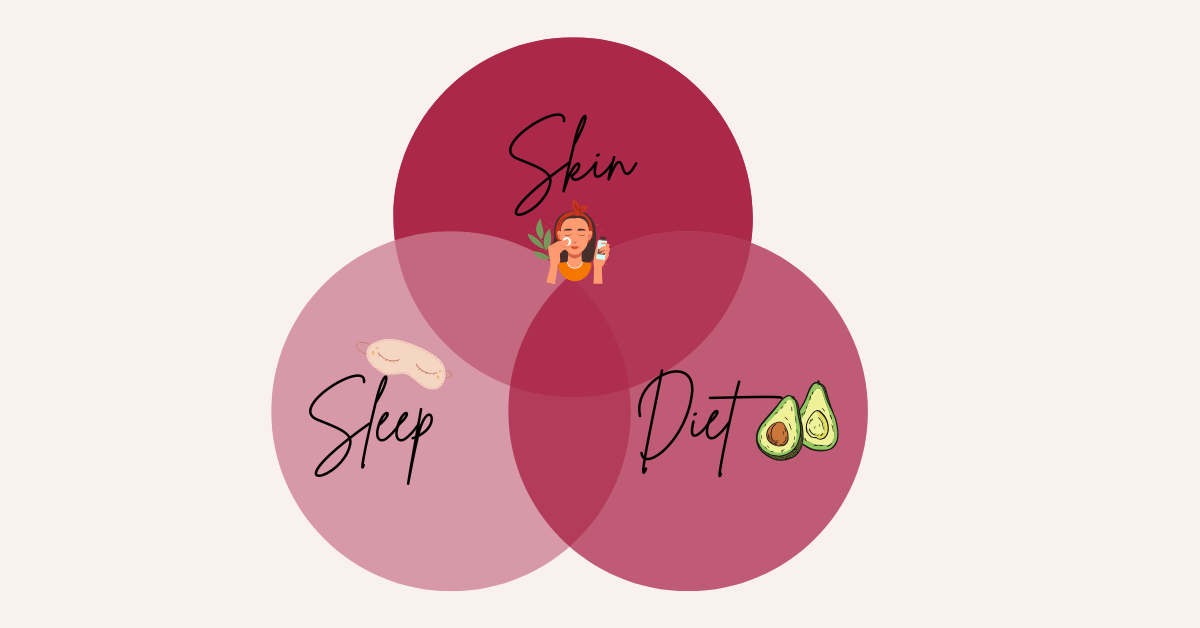
Sleep, Diet & Skin: The Trio Connection
Your skin doesn’t rely on sleep alone. What you eat during the day provides the building blocks your skin repairs with at night.
- Antioxidants from fruits and vegetables fight free radicals while you sleep.
- Healthy fats (omega-3s from fish, nuts, seeds) strengthen your skin barrier.
- Protein provides amino acids needed for collagen synthesis.
When diet is poor, even good sleep can’t fully repair skin. On the flip side, a nutrient-rich diet combined with restful sleep makes skin glow from the inside out.
Want to explore this connection further?
Read our article: Diet & Skin: What the Science Says.
Sleep, Stress & Skin: Breaking the Cycle
Stress and sleep are deeply linked. High stress makes it harder to fall asleep, and poor sleep raises stress hormones like cortisol. This vicious cycle shows up on your skin through:
- More breakouts
- Redness and inflammation
- Slower healing
Relaxation techniques like meditation, deep breathing, or gentle nighttime yoga can improve both sleep and skin health by lowering cortisol before bed.
Learn more in our guide: Stress & Skin: The Mind-Body Connection.
Tips for Better Sleep (and Better Skin)
- Stick to a sleep schedule → same bedtime and wake-up every day.
- Create a wind-down routine → reading, warm shower, calming tea.
- Keep your room cool and dark → ideal for deep, restorative sleep.
- Invest in skincare for night → moisturizers, serums, overnight masks.
- Cut blue light before bed → phones and laptops trick your brain into thinking it’s daytime.
- Stay hydrated → but avoid too much liquid right before bed to prevent waking up.
Conclusion: Sleep Is the Ultimate Skincare
Skincare products matter, but nothing replaces the role of a good night’s sleep. While you rest, your body is performing an invisible routine of repair and renewal—boosting collagen, balancing hydration, and fighting damage.
By combining quality sleep with a nourishing diet and effective stress management, you create the perfect foundation for healthy, radiant skin.
So tonight, consider your bedtime the start of your beauty routine. Your skin will thank you in the morning.
FAQ: Your Skin Questions, Answered
Q: How often should I exfoliate my skin?
A: Most skin types do well with exfoliation 1–2 times per week. Over-exfoliation can weaken your barrier and disrupt your microbiome, leading to sensitivity and dryness. Always listen to your skin’s signals.
Q: Do I really need sunscreen every day?
A: Yes! UV rays penetrate clouds and windows, so your skin is exposed daily. Sunscreen is the most powerful anti-aging and skin-protective step you can take.
Q: Can diet really affect my skin?
A: Absolutely. Antioxidant-rich foods (like berries and leafy greens) help protect against free radical damage, while omega-3 fatty acids support hydration and barrier strength. Hydration and balanced nutrition show up on your skin.